
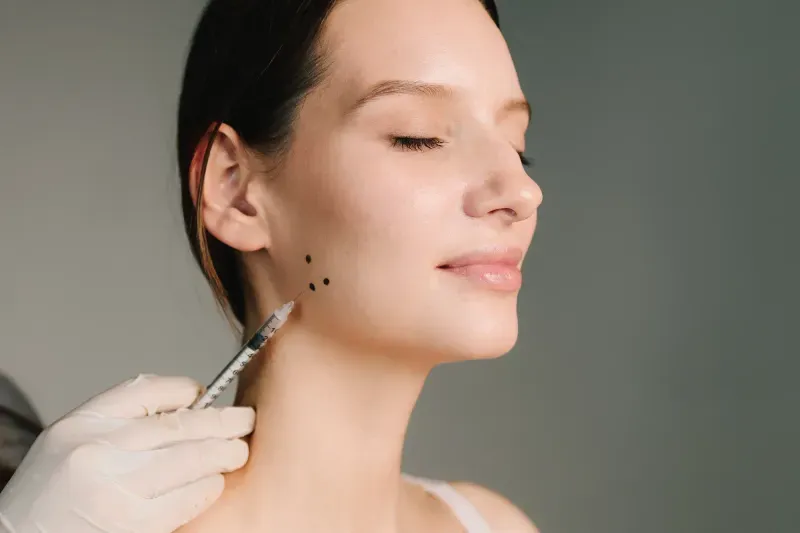
If your jaw aches by mid-afternoon, your temples throb most mornings, or your partner mentions you grind your teeth at night, you’re far from alone. At Solana Orthodontics, we hear these stories every week. The question many Solana family members ask is simple: how does Botox help TMJ pain, and why would an orthodontist offer it? The answer ties directly to what we do best, understanding the muscles, joints, and bite forces that shape your face. As a privately owned and operated boutique-style practice, we get to slow down and really listen to what your jaw is telling us.
What Is TMJ Disorder and How Does Botox Fit In?
TMJ disorder is dysfunction of the temporomandibular joint and the muscles that move your jaw. Botox helps TMJ pain by temporarily relaxing those overactive muscles, easing the clenching force that drives soreness, headaches, and grinding. It treats the source of muscular tension instead of only quieting the symptoms.
The temporomandibular joint connects your lower jaw to your skull, and the surrounding muscles, the masseter and temporalis, do an enormous amount of daily work. When that system is overloaded, you may notice:
- Jaw pain or fatigue, especially after waking
- Frequent tension headaches or migraines
- Clicking, popping, or grating sounds when chewing
- Limited mouth opening or a feeling of the jaw “locking”
- Ear pressure, fullness, or ringing
- Worn, chipped, or sensitive teeth from bruxism
Botox is a neuromodulator most people associate with smoothing forehead lines, but its mechanism makes it well-suited for muscular jaw pain too. While its use for TMJ is currently considered off-label, it has become an increasingly common option for Solana family members with muscular TMD and chronic clenching. By calming the muscles that overwork your jaw, Botox addresses one of the root drivers of pain, not just its outward signs. That focus on the cause, not just the symptom, is exactly how we like to approach care.
How Does Botox Relieve TMJ Pain? The Mechanism Explained
Botox relieves TMJ pain by blocking the nerve signals that tell your jaw muscles to contract. When injected into the masseter and temporalis, it reduces clenching force, lowers muscle tension, and decreases the grinding pressure that fuels pain. Most patients begin feeling relief within several days to a week, with full effects around two weeks.
Here is what typically happens, step by step:
- Targeted assessment. Dr. Sandra Nairooz examines your jaw muscles, bite, and pain patterns to identify which muscles are overactive.
- Precise injection points. Small amounts of Botox are placed into the masseter (the thick muscle along the jawline) and often the temporalis (above the temple).
- Signal blockade. Botox temporarily prevents the nerve from releasing acetylcholine, the chemical messenger that triggers muscle contraction.
- Gradual muscle relaxation. Over several days, the muscle eases out of its constant high-tension state.
- Symptom relief. Clenching weakens, grinding pressure drops, and the tension headaches that often ride along with TMD tend to fade.
The procedure itself is quick, usually around 10 to 15 minutes in our boutique-style practice, with no incisions and no anesthesia required. Effects typically last about 3 to 4 months, and many of our Solana family members schedule re-treatment seasonally so they can stay ahead of flare-ups. The American Association of Orthodontists notes that muscle overactivity in the jaw can play a meaningful role in TMD symptoms, which is exactly why a muscle-focused option like Botox can be so useful.
Benefits of Using Botox for TMJ and Jaw Tension
For Solana family members dealing with chronic muscular jaw pain, Botox offers a meaningful set of benefits, especially when paired with the bite and alignment expertise of an orthodontist.
What everyday benefits can patients expect?
- Non-surgical and minimally invasive. It’s a series of small injections, not a procedure on the joint itself.
- Fewer tension headaches. Many patients report a noticeable drop in clenching-related headaches and migraine frequency.
- Minimal downtime. You can return to work, school, or the carpool line right after your visit.
- Subtle jaw slimming. An overdeveloped masseter from years of clenching may soften, offering a more balanced facial appearance.
How does Botox protect your smile long term?
- Protects your teeth. Reduced grinding pressure helps preserve enamel, fillings, crowns, and orthodontic work.
- Pairs well with orthodontic care. Botox can quiet muscle pain while we address the underlying bite issue with braces, Invisalign, or airway-focused treatment.
For busy professionals and parents, that combination of fast relief and minimal disruption is often a turning point. It’s one more reason Solana Orthodontics is busy mom approved.
Botox vs. Other TMJ Treatments: How It Compares
Botox is rarely the only tool for TMD, and it isn’t always the right first step. The best plan usually combines a few approaches based on what’s actually driving your pain, and we love walking each family member through these options together.
| Treatment | What It Does | Best For | Limitations |
|---|---|---|---|
| Night guard | Cushions teeth from grinding | Mild bruxism, protecting enamel | Doesn’t reduce muscle activity itself |
| Physical therapy | Improves jaw mobility and posture | Stiffness, limited opening | Results build gradually over weeks |
| Bite correction / orthodontics | Resolves structural and alignment issues | Long-term, root-cause correction | Takes months to complete |
| TMJ surgery | Repairs joint damage | Severe structural joint disease | Invasive, higher risk, longer recovery |
| Botox | Relaxes overactive jaw muscles | Muscular TMD, clenching, tension headaches | Temporary, every 3-4 months |
A night guard protects your teeth but doesn’t tell your muscles to stop squeezing. Physical therapy helps mobility but works slowly. Surgery is reserved for severe joint damage. Orthodontic care is often the long-term fix when misalignment is fueling the problem. Botox sits in a useful middle space: fast muscular relief while we work on the cause.
In our practice, the best outcomes typically come from combining strategies, and that’s where we really enjoy getting creative for you. For example, a Solana family member may wear a night guard, receive Botox for active muscle pain, and start an orthodontic plan to correct the bite that started it all. That layered approach is what allows true, lasting relief, and it’s the kind of personal attention we build our days around.
Cost Factors for Botox TMJ Treatment
Botox for TMJ is priced by the unit, and in our practice most sessions use somewhere between 20 and 50 units depending on muscle size and severity of clenching. As a general market range, the typical investment runs from about $250 to $1,500 per session, with re-treatment every 3 to 4 months. Because TMJ use is often considered off-label and cosmetic, insurance coverage is limited.
What influences your personal estimate?
- Number of units required. Patients with strong, overdeveloped masseters often need a higher dose.
- Muscles treated. Adding the temporalis to the masseter increases the unit count.
- Frequency of sessions. Most patients re-treat every 3-4 months, which shapes the annual cost.
What about insurance and provider expertise?
- Insurance limitations. Many plans don’t cover off-label TMJ injections, though some medical plans may help in specific cases.
- Provider expertise and region. Care delivered by a clinician with deep jaw and bite knowledge often costs more but tends to produce more predictable outcomes.
Because every jaw is different, the most accurate way to understand your investment is to book your complimentary consultation. Dr. Sandra will review your symptoms, examine your muscles and bite, and outline a customized financial plan that fits your lifestyle. We believe boutique doesn’t mean more expensive, it means more attention to you.
Are You a Good Candidate for TMJ Botox?
Botox tends to work best for patients whose TMD pain is driven primarily by muscle overuse rather than structural joint damage. If your pain flares with stress, you wake with a sore jaw, or you’ve cracked teeth from grinding, you may be an excellent candidate.
When is Botox a strong fit for you?
You’re likely a good fit if you:
- Have muscular or myofascial TMJ pain rather than purely joint-based pain
- Clench or grind chronically, especially at night
- Experience tension headaches tied to jaw overactivity
- Haven’t gotten enough relief from a night guard alone
- Want a non-surgical option while exploring bite correction
When might another path make more sense?
Botox may not be the right choice if:
- Your pain comes purely from structural joint damage or disc displacement
- You’re pregnant or breastfeeding
- You have certain neuromuscular disorders
- You’re seeking a permanent fix without addressing the underlying bite
A thorough evaluation is the only way to know for sure. As a board-certified orthodontist and diplomate of the American Board of Orthodontics, Dr. Sandra Nairooz looks at the full picture, your bite, airway, muscles, and joint health, before recommending any care plan. With her you are not just a number, you are a solana family member.
If TMJ pain is stealing your mornings or wearing down your teeth, you don’t have to keep pushing through it. At Solana Orthodontics, Dr. Sandra Nairooz combines her DDS, MSD training, board certification, and years of clinical experience to evaluate the muscles, bite, and airway driving your symptoms, then build a plan that actually fits your life. We’re an open book about your options, your costs, and what to expect, and we’d love to help you find your radiance with a calmer jaw, fewer headaches, and a smile you’ll love showing off.
Frequently Asked Questions About Botox for TMJ
Does Botox for TMJ hurt?
Most patients describe a quick pinching sensation during each injection, similar to a small vaccine. The needles are very fine, the visit is short, and there’s no anesthesia required. Any minor soreness usually fades within a day.
How long until Botox works for TMJ?
You’ll typically notice changes within several days to a week, with the full effect around two weeks after treatment. Clenching feels less forceful, headaches often soften, and jaw fatigue eases. We usually schedule a follow-up to confirm you’re getting the relief you came in for.
Is Botox for TMJ permanent?
No. Botox is a temporary treatment, with effects lasting roughly 3 to 4 months. Most patients schedule maintenance sessions a few times a year. If we’re also correcting your bite with orthodontic care, you may need fewer sessions over time as the underlying cause is addressed.
Why would an orthodontist offer Botox?
Orthodontists spend years studying the muscles, joints, and bite forces that shape your face. That makes us uniquely qualified to evaluate where your TMJ pain is coming from and to inject precisely into the masseter and temporalis. Botox for TMJ is a natural extension of the jaw and bite expertise we already use every day.
Are there side effects?
Side effects are usually mild and temporary. You may notice slight bruising, tenderness at injection sites, or brief muscle weakness while chewing tough foods. Rarely, mild asymmetry can occur and resolves as the Botox wears off. Choosing an experienced injector significantly lowers these risks.
Can Botox replace a night guard?
For most patients, no, but they work beautifully together. A night guard protects your teeth from grinding contact, while Botox reduces the force behind the grinding. Many of our Solana family members continue wearing their guards while also receiving Botox for fuller relief.