
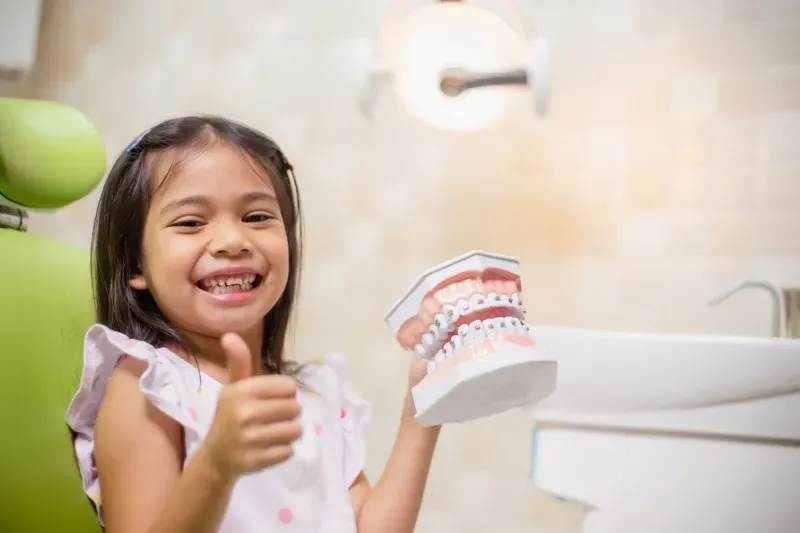
A palate expander is a small orthodontic appliance that gently widens a child’s upper jaw to create room for teeth and correct a narrow arch or crossbite. It works best while the jaw is still developing — typically before the early teen years — which is why an early orthodontic evaluation matters. Signs your child may need one include crowding, a crossbite, or difficulty breathing through the nose.
At Solana Orthodontics, Dr. Sandra Nairooz evaluates each child’s jaw, bite, and airway together, so expansion is recommended only when it genuinely helps.
What does a palate expander do?
The upper jaw is made of two halves that don’t fully fuse until the mid-teen years. An expander applies gentle, steady pressure to widen the jaw at that natural seam, creating more space. This can relieve crowding without removing teeth, correct a crossbite, and even improve nasal airflow in some children.
What are the signs a child may need an expander?
- Crowding with not enough room for teeth to come in straight.
- Crossbite where upper teeth bite inside the lower teeth.
- Narrow smile or a high, narrow palate.
- Mouth breathing or trouble breathing through the nose.
- Impacted teeth that lack space to erupt.
What is treatment like?
The expander is custom-fit to the roof of the mouth. Parents turn a small key a tiny amount on a set schedule, widening the jaw gradually over weeks. Kids adjust quickly; there may be mild pressure and a brief lisp at first. Once the target width is reached, the expander stays in place for several months to let new bone stabilize.
Why is timing so important?
Because expansion relies on the jaw’s growth seam, it’s far easier before that seam fuses. In our practice we often find that treating a narrow jaw early can prevent bigger problems — and more complex treatment — later. This is exactly why the American Association of Orthodontists recommends a first visit by age 7. Our overview of early interceptive orthodontics explains the broader benefits. Because a narrow upper jaw can also affect breathing, we consider the airway as part of the evaluation.
How Solana Orthodontics approaches expansion
As a board-certified orthodontist with a whole-health, airway-focused philosophy, Dr. Sandra recommends expansion only when the jaw, bite, and airway point to it. If you’re wondering whether your child needs one, early and interceptive orthodontics is the right place to start.
How does a palate expander work day to day?
A palate expander is custom-fit to the roof of the mouth and attached to the upper back teeth. It has a small screw in the center that, when turned, applies gentle outward pressure on the two halves of the upper jaw. Because a child’s jaw hasn’t fully fused, that pressure gradually widens the jaw at its natural growth seam. Parents typically turn the screw a tiny, precise amount on a schedule we provide — often once or twice a day for a set number of weeks. Each turn is small and quick, and together they add up to the width your child’s jaw needs.
What should you expect during expander treatment?
Most children adapt quickly. In the first few days there may be mild pressure after turns, a temporary lisp, and extra saliva as the mouth adjusts — all normal and short-lived. A small gap may appear between the upper front teeth during active expansion; far from a problem, it’s a visible sign the jaw is widening as planned, and it usually closes on its own. Once the target width is reached, the expander stays in place for several months without further turning, giving new bone time to fill in and stabilize so the result holds.
Does a palate expander hurt?
Expanders cause pressure rather than pain. After each turn, children commonly feel a few minutes of tightness or a slight tingling around the nose or cheeks, which fades quickly. Soft foods can help on the first day or two, and any tenderness is usually manageable without medication. Most kids are surprised how little the process bothers them, and they get used to the appliance within a week or so.
Are there benefits beyond making room for teeth?
Yes — widening a narrow upper jaw can do more than relieve crowding or correct a crossbite. Because the upper jaw forms the floor of the nasal cavity, expansion can improve nasal airflow in some children, which supports better breathing and may help kids who tend to breathe through the mouth. This whole-health benefit is part of why an airway-focused orthodontist evaluates the jaw and breathing together rather than looking at teeth in isolation.
How do you care for a palate expander?
Keeping the expander clean is straightforward but important, since food can collect around the appliance. Have your child brush thoroughly after meals, paying attention to the area around the screw and where the bands meet the teeth. A water flosser is a great tool for flushing out trapped food, and we’ll show your child exactly how to keep everything clean. During active turning, rinse the mouth after each adjustment. With good habits, an expander stays comfortable and the teeth and gums underneath it remain healthy throughout treatment.
What foods should be avoided with an expander?
The same rules that protect braces protect an expander. Steer clear of sticky candies, gum, and chewy sweets that can cling to the appliance, and avoid hard foods like ice, nuts, and hard candy that could bend or loosen it. Cut crunchy produce into small pieces. For the first day or two after placement and after turns, soft foods are most comfortable. Sticking to these guidelines keeps the expander doing its job without interruptions for repairs.
What happens after the expander comes out?
Once the jaw has widened and the new bone has stabilized, the expander is removed in a quick, painless visit. Depending on your child’s needs, the next step might be a period of monitoring as more permanent teeth erupt, or the start of braces or aligners to align the smile — often a second phase of treatment. Any temporary gap that opened between the front teeth during expansion typically closes naturally or is addressed in that next phase. We’ll map out the plan so you always know what comes next.
Are there alternatives to a palate expander?
An expander is the standard, most effective way to widen a narrow upper jaw in a growing child, but the right tool always depends on the specific issue. In some cases, other appliances or partial braces address a problem without full expansion, and mild spacing needs may be handled later with braces or aligners once more permanent teeth erupt. In adults, because the jaw seam has fused, traditional expansion isn’t possible, so alternatives like surgically assisted expansion or other approaches are considered. The only way to know the best option for your child is an evaluation, where we weigh expansion against the alternatives for their situation.
Frequently Asked Questions
Can a palate expander change my child’s face?
Widening a narrow jaw can subtly broaden a very narrow smile and, by improving nasal airflow in some children, support healthier development. Any changes are gentle and work with your child’s natural growth.
How long does a child wear a palate expander?
Active turning usually lasts a few weeks, then the expander stays in place for several more months to hold the new width while bone fills in — often around 4 to 6 months total, depending on the case.
Will the expander affect my child’s speech?
There may be a temporary lisp or extra saliva for a few days as your child adjusts. This resolves quickly as they get used to the appliance, usually within about a week.
Does a palate expander hurt?
Most children feel pressure — not pain — during turns, which fades within minutes. There may be brief tenderness and a temporary lisp as they adjust.
How long does a child wear a palate expander?
Active widening usually takes a few weeks, then the expander stays in for several more months to hold the new width while bone fills in.
Can adults use a palate expander?
Because the jaw seam fuses with age, traditional expansion is much harder in adults and may require surgical assistance. This is why early treatment is so valuable.