
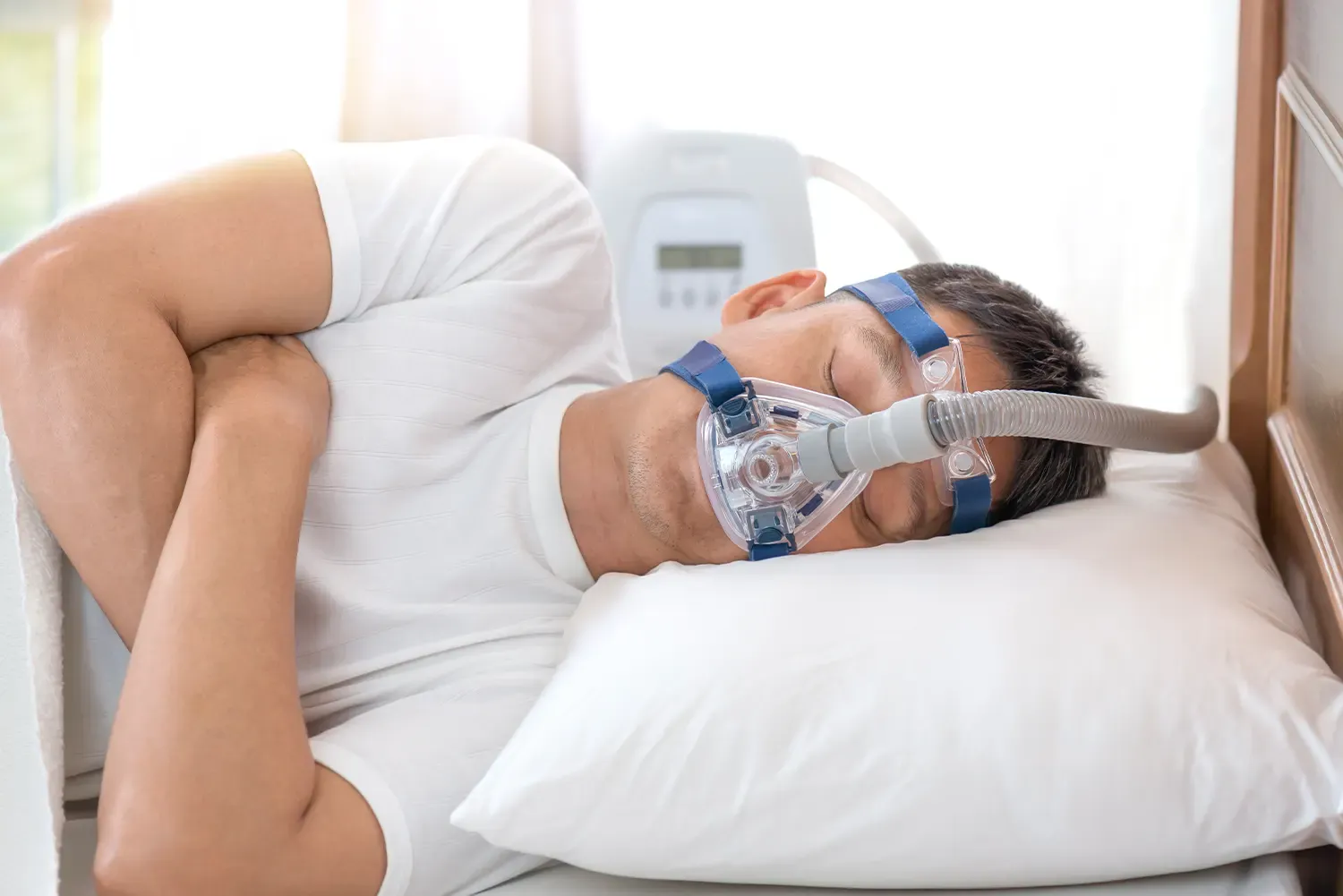
If you wake up exhausted, snore loudly, or have been told you stop breathing during sleep, you may be wondering whether orthodontics can help. The short answer is yes, in many cases. At Solana Orthodontics, our team looks at how your jaw structure, palate, and tooth alignment affect your airway, and how the right care can support better breathing and more restful sleep. Sleep apnea is far more common than most people realize, and many adults go years without a clear answer for why they feel so tired. Understanding the structural roots of the problem is the first step toward fixing it.
What Is Obstructive Sleep Apnea and Its Link to Orthodontics?
Obstructive sleep apnea (OSA) is a condition where the airway repeatedly collapses during sleep, causing breathing pauses, oxygen drops, and disrupted rest. Orthodontic care can help with sleep apnea when the underlying cause is structural, such as a narrow palate, retruded lower jaw, or crowded teeth that reduce airway space. Orthodontists are often the first to spot these warning signs because of how closely they study the bones, tissues, and growth patterns of the face.
A narrow upper jaw or a lower jaw that sits too far back leaves your tongue with less room, so it tends to fall toward the back of the throat during sleep. That soft-tissue collapse is what blocks airflow and creates the classic apnea cycle of snoring, silence, and gasping. Over time, these repeated interruptions take a real toll on your rest and your daytime energy.
Common symptoms you might recognize in yourself or a loved one include:
- Loud, chronic snoring
- Daytime fatigue, brain fog, or trouble focusing
- Waking up gasping or choking
- Morning headaches or a dry, sore throat
- Teeth grinding (bruxism) and a sore jaw
- In young patients: bedwetting, behavioral issues, or mouth breathing
Since we evaluate jaw growth, palate width, tooth crowding, and bite relationships at every visit, orthodontists are well positioned to identify airway concerns early. Dr. Sandra Nairooz, a board-certified orthodontist and Diplomate of the American Board of Orthodontics, screens every Solana family member for these structural risk factors as part of the initial evaluation. When signs of an airway issue appear, we coordinate with your physician or a sleep specialist to confirm a diagnosis and build the right plan. According to the American Academy of Sleep Medicine, OSA affects a significant portion of adults, yet many cases remain undiagnosed, which is exactly why early screening matters so much.
How the Orthodontic Journey Addresses Sleep Apnea
Orthodontic care addresses sleep apnea by changing the structures that shape your airway. Palatal expansion widens a narrow upper jaw, mandibular advancement appliances move the lower jaw forward, and guided jaw growth in young patients creates more room for the tongue and soft tissues. Together, these approaches increase airway volume so air can move freely while you sleep.
Here are the main ways we can help:
- Palatal expansion. A narrow palate often means a narrow nasal floor and a crowded tongue. Expanders gently widen the upper jaw, which can improve nasal breathing and create more space for the tongue to rest forward.
- Mandibular advancement. Custom oral appliances reposition the lower jaw slightly forward during sleep, pulling the tongue and soft palate away from the back of the throat. This is one of the most common orthodontic tools for mild to moderate OSA and chronic snoring.
- Airway-focused orthodontics. This approach looks at the relationship between your dental and skeletal structures and your airway function. Plans are designed not just for a straight bite, but for healthy breathing day and night.
- Early interceptive treatment for young patients. In growing children, we can guide jaw development before problems become permanent. Widening a narrow palate at age 7 or 8 is far easier than addressing the same issue in adulthood.
- Clear aligners and braces as part of the plan. For some adults, correcting crowding and bite issues with Invisalign or braces is part of the broader airway strategy, especially when paired with an oral appliance.
- Coordination with sleep physicians. Orthodontists don’t diagnose sleep apnea. We work alongside your sleep doctor, who interprets your sleep study, so your care is connected from diagnosis through follow-up.
Your plan is built around your anatomy, your symptoms, and your medical team’s recommendations, so no two cases look exactly alike.
Benefits of Orthodontic Sleep Apnea Treatment
For the right candidate, orthodontic care for sleep-disordered breathing delivers quieter nights, more daytime energy, non-surgical comfort, and a healthier bite, all without bulky machines. In young patients, it can correct the root cause of airway issues during growth. These benefits show up both at night and during your waking hours, which is why so many families find the approach worthwhile.
Is Orthodontic Sleep Apnea Treatment Non-Surgical and Comfortable?
Yes. Oral appliances and expansion are far less invasive than surgery, and many Solana family members find them more tolerable than CPAP for mild to moderate cases. The appliances are compact and easy to wear, which makes them a practical option for everyday life. There’s no recovery period and no machinery to manage at the bedside.
Will Orthodontic Treatment Improve My Sleep and Energy?
In many cases, yes. Snoring often drops dramatically, which means better sleep for you and the person next to you. When your brain finally gets uninterrupted oxygen at night, daytime focus, mood, and energy tend to improve as well. Many people are surprised by how much sharper they feel once their nights become more restful.
A few more advantages worth knowing:
- Long-term structural correction in young patients. Guiding jaw growth during childhood can address the root cause of airway issues, rather than managing symptoms later in life.
- A healthier bite, too. You get the airway benefits alongside straighter teeth, better chewing function, and a more balanced facial profile.
- Portable and travel-friendly. Oral appliances fit in a case the size of a retainer, making them easy to take anywhere you go.
Orthodontic Treatment vs. CPAP and Surgery: A Comparison
There’s no single right answer for every patient. The best option depends on the severity of your apnea, your anatomy, and your lifestyle. Here’s how the main approaches compare:
| Feature | Orthodontic Oral Appliance | CPAP Machine | Surgery |
|---|---|---|---|
| Best for | Mild to moderate OSA, chronic snoring | Moderate to severe OSA | Specific anatomical blockages |
| Comfort | Compact, worn like a retainer | Mask and hose worn all night | Recovery time required |
| Portability | Travel-friendly, fits in a small case | Requires power and equipment | Not applicable after healing |
| Compliance | Generally high, easy to wear | Lower; many patients struggle to adapt | One-time procedure |
| Invasiveness | Non-invasive | Non-invasive but mechanical | Invasive |
| Reversible | Yes | Yes | Often permanent |
CPAP remains the gold standard for severe sleep apnea and is highly effective when worn consistently. The challenge is that many people can’t tolerate the mask, the noise, or the feeling of forced air, and studies have long noted that adherence rates are a common hurdle. That’s where orthodontic appliances often help, especially for mild to moderate cases or as a second-line option when CPAP hasn’t worked out.
Surgery is typically reserved for specific structural problems, like significantly enlarged tonsils or major skeletal discrepancies, and is usually considered after less invasive options have been explored. It carries a longer recovery and is rarely the first step for most people.
For some patients, a combination works best. You might use CPAP at home and an oral appliance for travel, or pair palatal expansion in a child with ongoing monitoring by a sleep physician. Your medical and orthodontic team can help you decide what fits your situation, your sleep study results, and your daily routine.
Cost Factors for Orthodontic Sleep Apnea Treatment
The cost of orthodontic sleep apnea care depends on the type of appliance, the length and complexity of your case, and whether you also need braces or Invisalign for bite correction. A simple custom mandibular advancement device costs less than a multi-phase plan involving expansion, full orthodontics, and ongoing monitoring. Medical insurance may cover part of OSA-related care, which can change your out-of-pocket numbers considerably.
Factors that influence your total investment include:
- Type of appliance or treatment. A single oral appliance is typically less involved than combined expansion plus full orthodontics.
- Length and complexity of treatment. Adult cases with significant crowding or jaw discrepancies usually take longer than guided growth in a child.
- Whether full orthodontics are part of the plan. If we’re correcting your bite and supporting your airway at the same time, the scope is broader.
- Medical vs. dental insurance. Because OSA is a medical diagnosis, some appliances may be partially covered under medical insurance rather than dental, depending on your plan.
- Diagnostic records and follow-up. 3D imaging, sleep study coordination, and adjustment visits are part of a thorough plan.
For the San Antonio families we work with, the guiding belief is simple: boutique doesn’t mean more expensive, it means more attention to you. Customized financial plans are built so the numbers make sense for your household, and we’re an open book about what your care will involve from day one. Knowing these cost factors up front helps you weigh your options without surprises.
Are You a Candidate for Orthodontic Sleep Apnea Treatment?
You may be a candidate if you have mild to moderate OSA, struggle with chronic snoring, can’t tolerate CPAP, or are a parent of a child showing signs of disordered breathing. The first step is a sleep study ordered by your physician, followed by an orthodontic evaluation of your jaw structure, palate width, airway, and bite. Many San Antonio families come to us after a sleep study confirms the diagnosis and they’re looking for a comfortable next step.
Good candidates often include:
- Adults diagnosed with mild to moderate obstructive sleep apnea
- People who snore heavily and want a non-surgical option
- Those who’ve tried CPAP but can’t tolerate the mask or pressure
- Young patients with narrow palates, mouth breathing, or signs of disrupted sleep
- Children whose pediatrician or ENT has flagged airway concerns
- Adults with retruded lower jaws contributing to airway crowding
What we can’t do is diagnose sleep apnea ourselves. A sleep study, ordered and interpreted by a sleep physician, is essential before any appliance therapy begins. Once you have that diagnosis, Dr. Sandra Nairooz will evaluate your facial structure, airway, and tooth alignment to determine whether orthodontic care can play a role in your plan.
Frequently Asked Questions
Can braces cure sleep apnea?
Braces alone don’t cure sleep apnea, but they can be part of a plan that does help. When braces or Invisalign are paired with palatal expansion, mandibular advancement, or other airway-focused care, they can support meaningful improvements in breathing. The goal is to address the underlying structure, not just straighten teeth.
How long does orthodontic sleep apnea treatment take?
Timelines vary based on your anatomy and the type of care you need. A mandibular advancement appliance can often be fitted within a few weeks once records are taken. Full orthodontic plans that include expansion and bite correction typically run 12 to 24 months, with ongoing monitoring afterward.
Is airway orthodontics safe for young patients?
Yes. Airway-focused orthodontics is widely used in growing children to guide jaw development at the most effective age. According to the American Association of Orthodontists, children should have their first orthodontic evaluation by age 7, which is also when many airway concerns can be identified and addressed early.
Does insurance cover orthodontic sleep apnea treatment?
It depends on your plan. Because sleep apnea is a medical diagnosis, oral appliances are sometimes covered under medical insurance rather than dental orthodontic benefits. We’ll help you understand what your policy includes and build a customized financial plan to fill any gaps.
Can Invisalign help with sleep apnea or snoring?
Invisalign on its own isn’t a sleep apnea treatment, but correcting crowding and bite issues with clear aligners can be part of a broader airway strategy. For many adults in San Antonio, Invisalign is combined with a custom oral appliance worn at night to address both alignment and breathing. If chronic snoring is affecting your life, Dr. Sandra Nairooz brings her DDS, MSD, and board certification to every airway evaluation, working alongside your physician to build a plan that fits your anatomy, your lifestyle, and your family. Book your complimentary consultation today and find your radiance, one restful night at a time.